Who can depend on whom?
- Trust and reputation
- Care and mutual support
- Governance and shared decisions
- Belonging across generations
From working community to physical home
A Bene Esse physical community is not a housing development with community painted on afterward.
It is physical infrastructure built around relationships, services, useful work, culture and trust that have already begun proving what they can do together.
Let trust accumulate before concrete does.
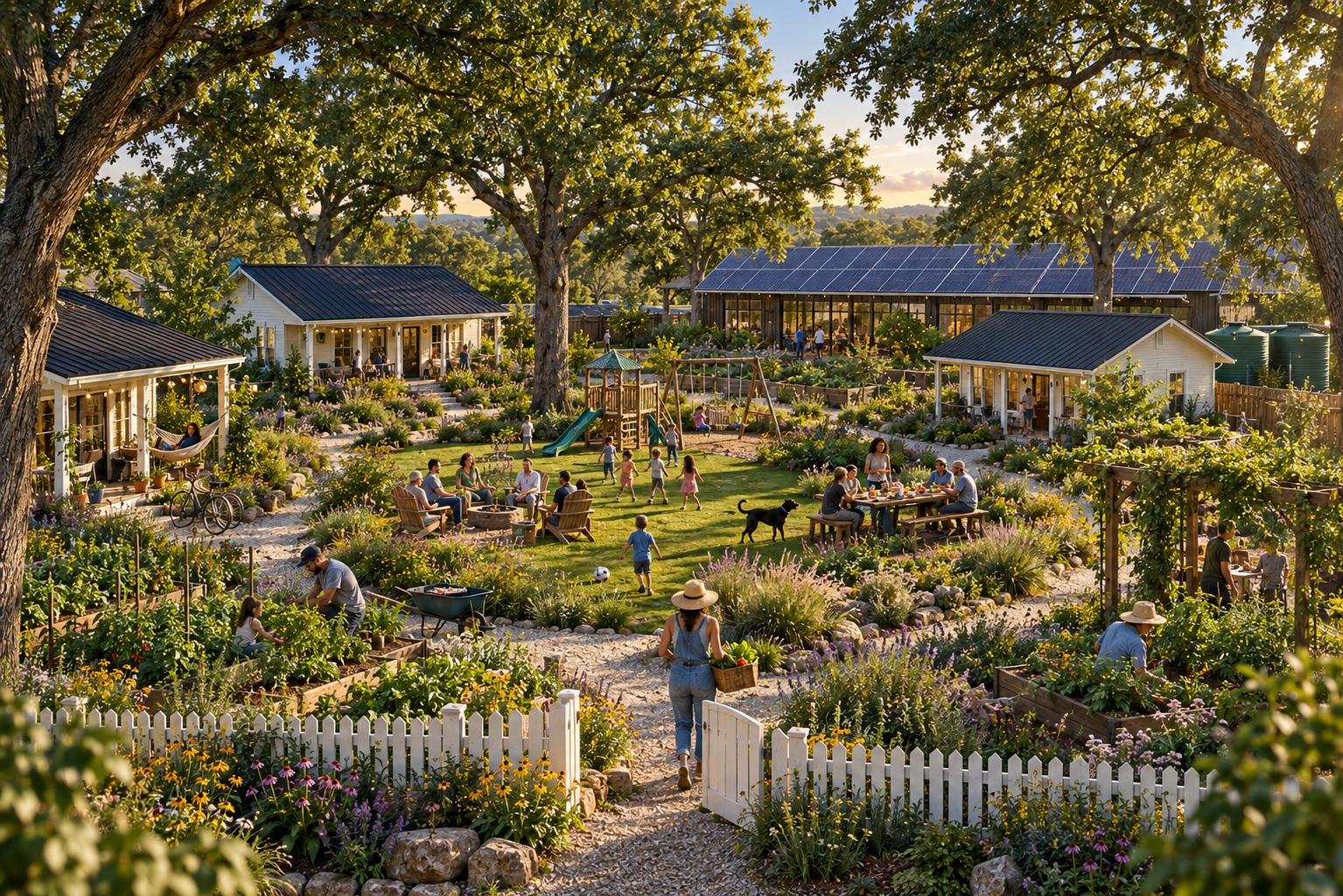
Do not confuse the container with what it holds
Buildings don’t create community.They can give a community a home.
Traditional development begins with land, yield, units, rents, square footage, amenities and exit value. Then it asks how to make the result feel like a community.
Bene Esse begins somewhere else: Who is here? What do they trust? What can they do? Whom can they serve? What keeps happening?
The answers are not decoration for the site plan. They are the reason for one.
The part conventional development keeps discarding
The Halo is everything that lets a place become useful to the people within it—and to the community beyond its property line.
If those systems are stripped out while the houses remain, the development may still be attractive. It is no longer the same idea.
These are not amenities. They are load-bearing.
Proof becomes place
Virtual activity turns assumptions into evidence. Repeated behavior can become a physical requirement instead of an architect’s guess.
What the community proved
Families repeatedly organize childcare, elder support, wellness and relief for one another.
Flexible care rooms, quiet space, safe outdoor play, storage and paths designed for every generation.
The building follows the relationship. It does not attempt to manufacture one.
The Bene Esse progression
By the time a foundation is poured, the community should know more than what it hopes will happen. It should have evidence of what people actually use, provide, sustain and trust.
Make the purpose, people, means and first moves visible.
Give the emerging community somewhere to work together.
Become useful beyond the eventual property line.
Wrap land and infrastructure around what has begun to prove itself.
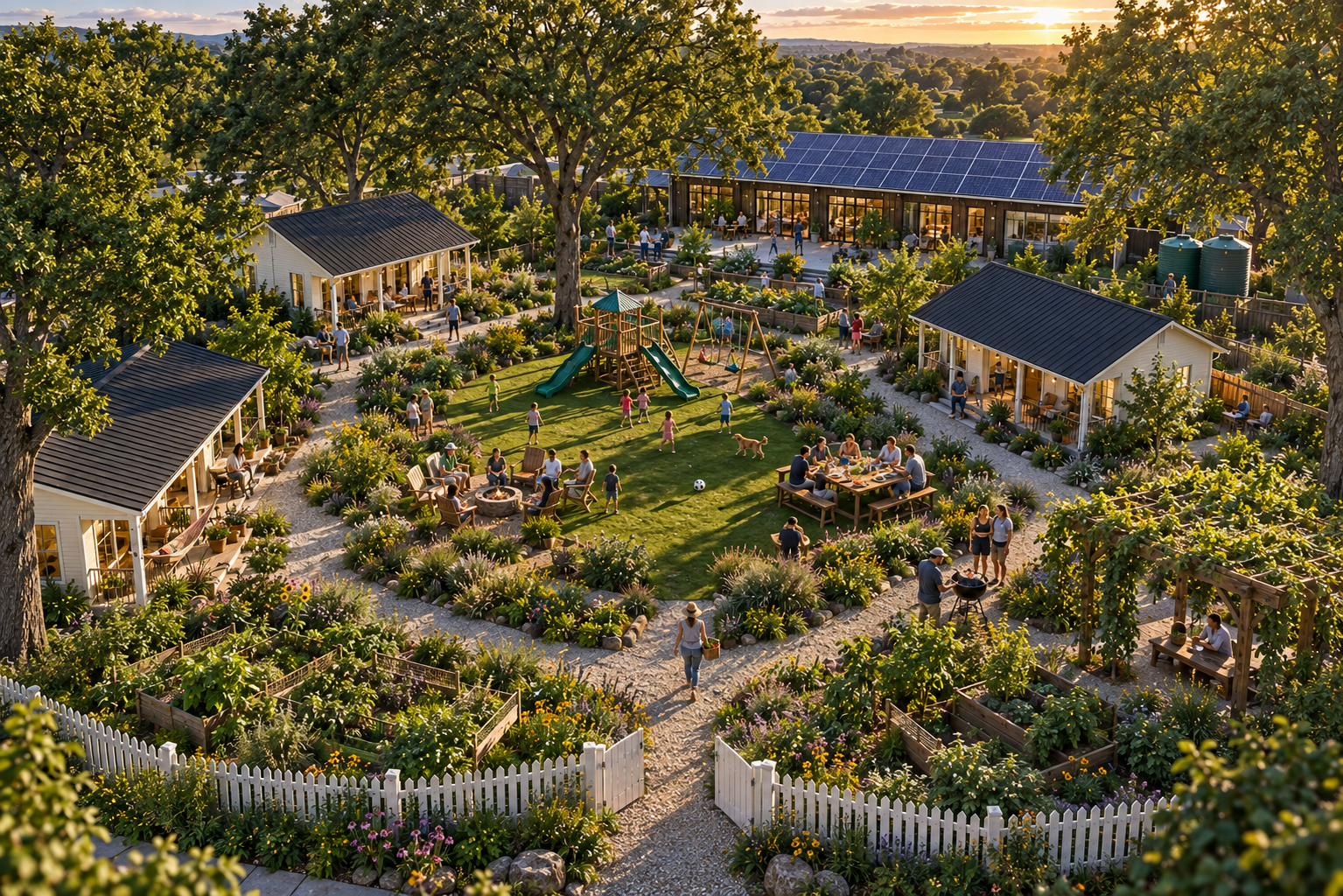
The developer test
Every project faces pressure to simplify. The useful spaces disappear. The shared infrastructure becomes an amenity package. The reason for building is slowly replaced by the easiest thing to finance.
Most developers know how to build houses. Far fewer know how to recognize what those houses are supposed to protect.
From methodology to physical delivery
Terra Global Developments has licensed the Bene Esse methodology and the 214 Alpha community technology that powers the Bene Esse App for deployment through its HALO Communities work.
Bene Esse helps people recognize the community, activate it virtually and learn what is real. HALO Communities carries that evidence toward planning, capital, infrastructure, construction and long-term stewardship.
The purpose is not to hand the community over to a developer. It is to find a development partner capable of giving what the community has begun a physical home.
Licensed implementation partner
Homes Anchored in Legacy and Opportunity
Build without losing the reason
Find a development partner who understands what has already begun—and knows how to give it a physical home.